How to Add Volume to Men's Hair: Tips & Techniques
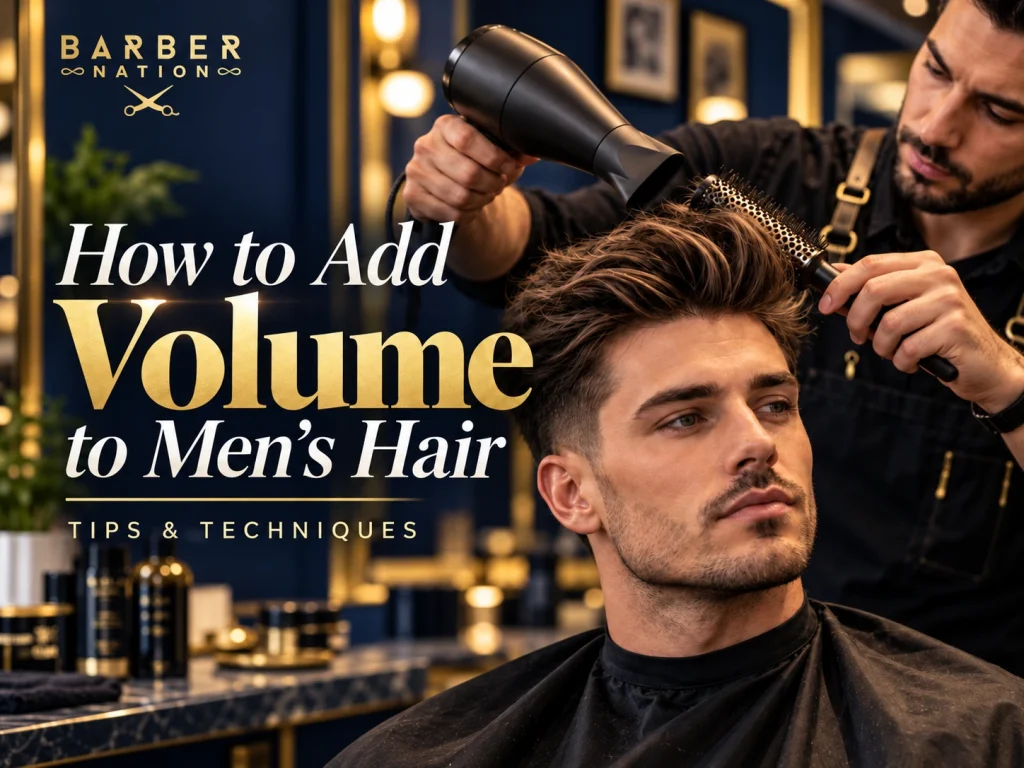
If you’re trying to work out how to add volume to hair that goes flat by lunchtime, it usually comes down to three things: clean hair with no leftover product, a blow-dry that lifts the roots, and a cut that leaves the right length on top. Products help, but they can’t do the job alone.
Why Does Men’s Hair Go Flat?
Men’s hair goes flat when something weighs it down, or nothing holds the roots up. The usual culprits are length, oil or leftover product, and roots that have dried in the direction they naturally fall.
Density plays a part too. Density (how many hairs you have) and strand thickness both affect how full hair looks, and you can have fine strands in large numbers or thicker strands with lower density.
Styling can improve the look of volume, but it can’t add hairs. It’s worth working out which problem you have before spending money on products: residue and drying habits are easy to fix at home, while density is something a good cut and styling can work around but not change.
How Do You Add Volume to Men’s Hair at Home?
Wash out any product, keep conditioner off the roots, dry the roots up and away from the way they naturally fall, then finish with a little dry product such as powder or matte clay. The blow-dry does most of the work. Product just helps the shape last.
- Wash properly. Shampoo the scalp and roots well and rinse for longer than feels necessary. Leftover wax, clay or pomade weighs hair down. A shampoo labelled “volumising” can help, but a thorough rinse matters more than the label.
- Condition the lengths, not the roots. For fine or straight hair, apply it to the ends only. Dry or curly hair may need it along the whole length, but keep it away from the roots if you want lift.
- Start with damp, not dripping, hair. Towel-dry until it stops dripping, then work a little mousse or sea salt spray in at the roots. It adds body at the roots before you dry.
- Dry the roots first, against the way they fall. Use low to medium heat and your fingers (or a round brush if you have more length) to lift the hair at the front and crown in the opposite direction to its natural fall. Once the roots are dry, shape the top the way you want it to sit. If you blow-dry often, use a heat-protectant product too.
- Finish with cool air. Switch to the cool setting for the last few seconds, once the shape is right. It helps the style hold.
- Add a little dry product. Dust powder in at the roots, or warm a pea-sized amount of matte clay or paste between your palms and work it through the mid-lengths. A light-hold hairspray on top will help it last the day.
Which Haircuts Give Men the Most Volume?
The best haircuts for volume leave enough length on top to lift, usually with tapered or faded sides so the top looks fuller by contrast. Textured quiffs and pompadours work well. A very short all-over cut leaves nothing to lift.
Length matters more than most people expect. Clipper grades commonly run from 0 up to 8, which leaves about 25 mm, as our guide to men’s hair grades explains. Longer guards exist, but a quiff or pompadour is usually scissor-cut on top so the barber can control length and shape, while the sides are clipped. If you want some body without going long, the middle grades (around 5 and 6) keep enough length to work with.
A scissor cut also gives your barber more control over shape and texture, and we offer it as an add-on to a standard cut (see our services and prices). The sides are worth a conversation as well; our high fade vs low fade guide compares the two.
If your hair is fine or thinning, long hair that sits flat can show more scalp than a shorter, textured cut. A barber can look at your density and growth pattern and tell you what will actually work, which beats copying a photo of someone with thicker hair.
What Are the Best Products for Men’s Hair Volume?
For lift, start with light products: a mousse or sea salt spray on damp hair before drying, then a powder, or a small amount of matte clay, on dry hair. Heavy or excessive product can flatten fine hair in particular, though a suitable pomade can help hold a fuller quiff or pompadour.
|
Product |
What it does |
When to use it |
|
Mousse or foam |
Adds body at the roots before drying |
Damp hair, before blow-drying |
|
Sea salt or texturising spray |
Adds texture and a matte, slightly rough finish |
Damp hair, before blow-drying |
|
Styling powder |
Lifts and separates the roots without a heavy feel |
Dry hair, at the roots |
|
Matte clay or paste |
Adds texture and hold with a flat, non-shiny finish |
Dry hair, through the mid-lengths |
|
Light-hold hairspray |
Keeps the shape in place through the day |
Last step, on dry hair |
Fine hair is the easiest to overload, so start with less than you think you need. Thick hair usually wants more hold, but piling product on at the roots won’t help it either.
Perth summers add their own challenge. The Bureau of Meteorology’s averages put daytime highs in Perth Metro at about 31–32°C in January and February, and heat and sweat soften a style over a long day.
In our shop, you’ll find a styling powder and a matte clay, along with hairspray, and your barber can talk you through which suits your hair type.
How Do You Add Volume to Fine, Thick, Wavy or Straight Hair?
Match the routine to your hair rather than copying someone else’s.
1. Fine Hair
It’s easily weighed down, so use mousse or powder, keep amounts small and go easy on heavy waxes. A cut that isn’t too long helps too.
2. Thick or Coarse Hair
Dense hair can look wide at the sides and flat on top. Ask your barber to take weight out of the sides and add texture to the top, then use clay or paste for hold. A round brush gives you more control while drying.
3. Straight Hair
It tends to fall flat sooner, so a texturising spray gives it some grip before you dry.
4. Wavy or Curly Hair
Lift at the roots with your fingers, or use a diffuser on a low setting, and choose a light product over a heavy gel, which can weigh the curl down.
Why Does My Hair Still Look Thin After Styling?
Styling lifts the hair you have; it doesn’t add more. Styling can improve fullness, but it can’t tell you whether you’re losing hair.
Thinning is common. Healthdirect’s guide to Male Pattern Baldness male pattern baldness describes it as a common genetic condition that causes thinning at the crown and a receding hairline, affecting about half of men over 40.
A barber can cut to suit thinner hair, but we can’t diagnose or treat hair loss. If you notice increasing scalp visibility, unusual shedding, or loss that is sudden, patchy or worrying you, see your GP.
What Mistakes Flatten Men’s Hair?
- Too much product. More product means more weight, not more volume.
- A heavy product for a light job. Heavy wax and pomade can flatten fine hair. For lift, try powder, matte clay or paste first.
- Letting hair air-dry flat. Hair settles in its natural direction as it dries, so even a quick blast of the dryer at the roots helps.
- Leaving the top to grow out heavy. Overgrown hair gets heavy and loses its shape. Regular trims keep the top light enough to lift.
What Should You Ask Your Barber For?
Tell your barber you want more volume, and bring a photo of a cut you like. Then ask how much length they’d leave on top and how to style it at home.
Mention your routine, too. If you won’t pick up a dryer in the morning, say so, and a good barber will adjust the cut to suit. It also helps to arrive with clean, dry hair and no product in it; our guide to washing your hair before a haircut explains why.
Barber Nation has eight shops across Perth, and walk-ins are welcome. Find your nearest shop, check our services and prices, or browse the shop.
FAQs
How can I add volume to my hair without a hairdryer?
Let it air-dry while you lift the roots with your fingers, and use a light product such as a sea salt or texturising spray. Changing your parting can also give the roots more lift. You’ll get less height than you would with a dryer.
Does volumising shampoo work?
It can help by leaving hair clean and light, but results vary and the label alone doesn’t guarantee anything. A thorough rinse and keeping conditioner off the roots matter at least as much.
Do I need a round brush?
Not for short hair, where your fingers and a dryer are enough. A round brush helps once you have more length to shape.
Can longer hair have volume?
Yes, but length adds weight, so the roots need more help. Dry them upright, use a light product, and ask your barber whether shortening or layering the top would help.